 Orlando Lime Zone
Grow
Tahiti lime in the yard
The lime in the grocery bag is a Tahiti, also called Persian. Citrus Culture in the Home Landscape (HS132) files it under acid fruits and says fruit can be picked any time of year from a bearing tree. Key lime is a different fruit and a colder problem. Orlando heat and humidity size the crop; a freeze night is what ends it.
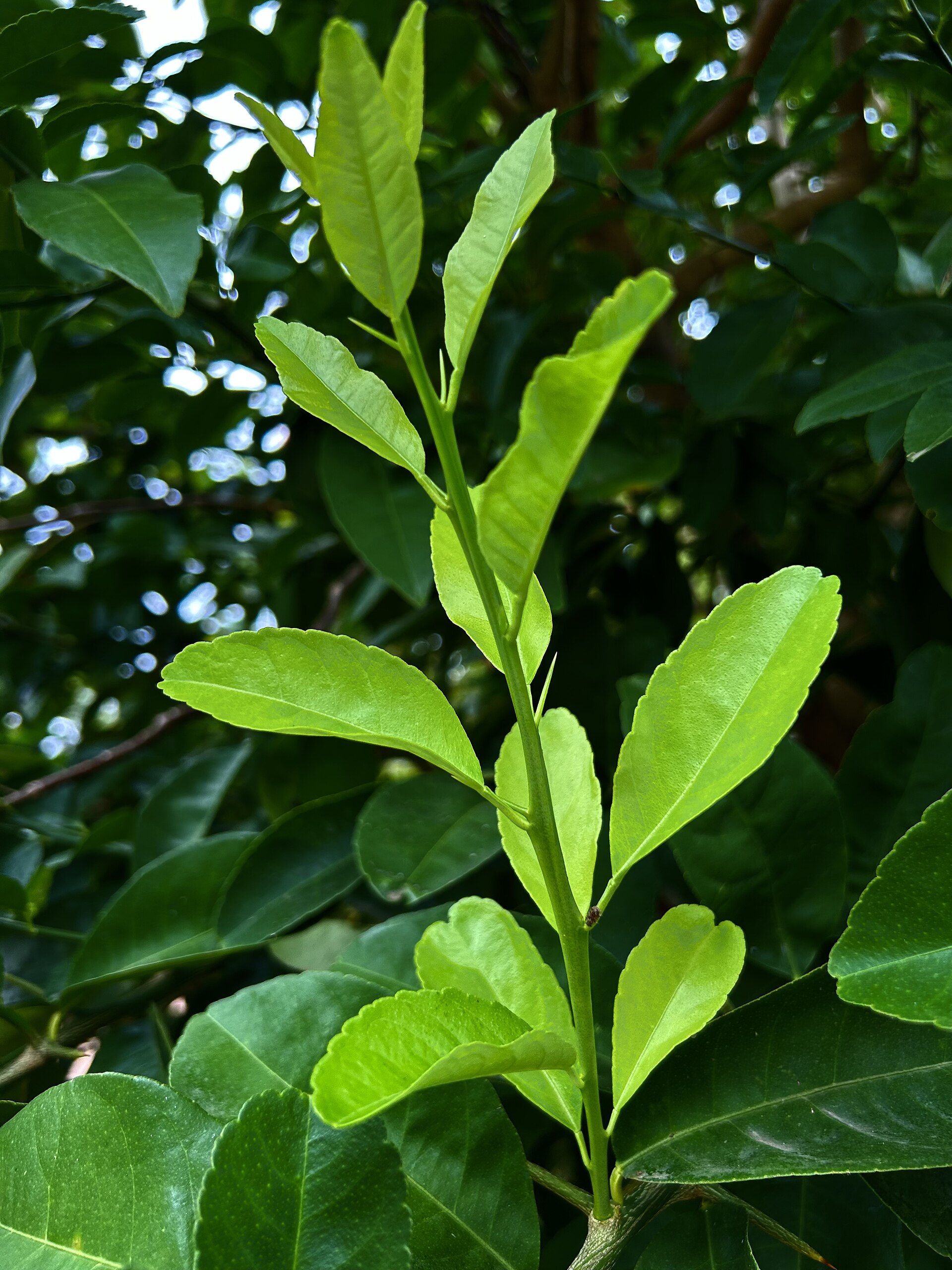
The 'Tahiti' Persian lime and 'West Indian' (Key or Mexican) lime make a satisfactory acid fruit for the home since fruit can be picked any time of the year.
Tahiti versus Key
The home-landscape citrus guide's Table 1 puts Persian lime at zero to one seed with a June through September note, and flags it for postbloom fruit drop. Key lime is listed everbearing, three to eight seeds, and cold sensitive, with scab, anthracnose, and aphids against it. They are different fruit. The bag in the produce aisle is almost always Tahiti. Ask the nursery which one is on the tag before you pay for it.
Growing 'Tahiti' Limes in the Home Landscape (CH093) is the Tahiti paper: oval fruit about 2¼–2¾ inches long, seedless in a solid planting, 90–120 days bloom to maturity, some bloom all year, heaviest February to April in Florida, peak crop June–August. Key Lime Growing in the Florida Home Landscape (CH092) is the Key paper: 1½–2 inch fruit, 10–15 seeds, yellow peel at harvest, flowering mainly in spring, principal season early summer in south Florida and later farther north. The Key lime paper also says Key lime is highly susceptible to anthracnose; Tahiti appears immune to that disease.
| Acid fruit in the paper | Season listed | Seeds | Pests named |
|---|---|---|---|
| Persian lime (Tahiti) | June–Sept | 0–1 | Postbloom fruit drop |
| Key lime (West Indian) | Everbearing | 3–8 | Scab, anthracnose, aphids, cold sensitive |
| Calamondin | Nov–Apr | 3–5 | Listed cold hardy |
| Limequat | Nov–Mar | 2–5 | Scab |
Cold is the limiter
Everything the home-landscape citrus guide says about citrus culture still applies to a lime. Full sun beats light shade for fruit. Home spacing is a minimum of 15 feet between trees. Keep the tree away from septic tanks and drain fields. Weeds and sod come out from under the canopy and especially off the trunk, because weeds against the bark invite foot rot. Mulch is not recommended around citrus, and if the tree sits in a mulched bed the mulch stays at least a foot from the trunk.
Where a lime differs is the freeze paragraph. The home-landscape citrus guide says frequency of freezing temperatures should drive the choice in historically cold areas, and that where freezes are expected every few years the more cold-tender types should be avoided and only the hardiest chosen. A Tahiti lime is on the tender side of that sentence. If your lot has a history of hard nights, the paper's answer is a different fruit, or a pot.
How to plant
- Buy a container-grown tree. The home-landscape citrus guide says those can be planted in any month and are more likely to live and thrive.
- Set it at the same soil line it had in the container, in full sun. Pull some soil off the root mass so outer roots meet the sand instead of sitting in a block of potting mix.
- Build a basin that holds five to ten gallons. Run a hose into it ten to fifteen minutes twice a week for the first month, then again whenever new growth wilts in mid-afternoon.
- Start fertilizer when buds swell, or three weeks after planting, and repeat about every six weeks from February through October in the first year.
The home-landscape citrus guide calls an 8-8-8 with other macro and micronutrients a good general citrus fertilizer. The closest thing on the shop shelf is a 5-2-6 citrus food with micronutrients. Get this. Keep it off the trunk, and spread it over the basin area in the first year.
A pot you can move
Of these acid fruits, a tender lime is the best case for a container. The home-landscape citrus guide lets a container-grown tree go in the ground any month, and the same tree left in a pot is one you can roll into a garage when a hard night is forecast. Use a pot with real drainage holes and one you can actually tip onto a dolly when it is full of wet soil. Do not trust a dwarf claim that is not printed on the nursery tag. Per Tahiti lime guidance: avoid a root-bound nursery tree—roots circling the pot wall do not grow out cleanly once planted.
Tahiti lime guidance freeze numbers for Tahiti: leaf damage below 28°F, wood damage below about 26°F, severe damage or death below 24°F. Key lime guidance for Key: foliage damage at 30–32°F, wood damage or death below 29°F. The 2023 USDA Plant Hardiness Zone Map puts Orlando in zone 10a (average annual extreme minimum 30–35°F). That is an average, not a ceiling. Hypothesis: a patio pot you can roll is the Orlando plan because a single 26°F night still sits inside Tahiti wood-damage range, and Key foliage is already in trouble near 32°F.
For a tree in the ground the home tool is cloth, not a promise. A lightweight row cover is what gets thrown over a young tree on a freeze night. Get this. Anchor the edges so wind does not lift it off. The home-landscape citrus guide does not publish a date that holds every winter, and neither does this page.
Bloom and fruit set
UF/IFAS Persian lime notes:Tahiti flowers may be borne in clusters of five to ten on new shoots. Some bloom occurs all year, with the heaviest bloom in Florida from February to April. Fruit requires 90–120 days from bloom to maturity, depending on temperature. Trees bear all year, with the greatest production in June, July, and August. Tahiti lime does not require pollination to set fruit, though bees visit the flowers. UF/IFAS Key lime notes:Key lime also sets without a second tree; flowering occurs throughout the year but mainly in spring.
The home-landscape citrus guide Table 1 names postbloom fruit drop on Persian lime. UF/IFAS Persian lime notes describes it: brown-to-orange lesions on petals, then the young fruitlet drops and a button stays on the stem. It is most common in the rainy season. Overhead watering during bloom raises the risk. Copper on flowers during bloom makes it worse. The period from bloom through fruit development is also when UF/IFAS lime guidance says to avoid drought stress—water the basin, not the canopy.
Florida humidity and the rainy season
UF/IFAS Tahiti and Key lime papers watch foliar disease during the rainy months (about May to September): greasy spot, melanose, algal disease, and citrus canker. Key lime is highly susceptible to anthracnose (withertip and blossom blight); UF/IFAS lime guidance says Tahiti appears immune. Both papers: plant in full sun with air movement, and do not wet the foliage when watering, especially in the evening and when the tree is blooming. Hypothesis: Orlando’s humid nights keep leaves wet longer than a windy south-Florida grove, so those rainy-season controls still apply on a patio tree even when the pot itself dries faster in afternoon heat.
A pot in full sun on pavers can cook roots on a June afternoon. That specific number is not in the lime papers. Hypothesis: a light-colored pot, real drainage, and water when new growth wilts at mid-afternoon (HS132’s young-tree cue) beat a black nursery can left on hot concrete.
Pests
The home-landscape citrus guide says most citrus in a landscape can be grown without chemical pesticides, that blemished peel usually means nothing about the fruit inside, and that many citrus pests sit under natural biological control. Pest control should be undertaken only as the need becomes evident. When it is, the paper names horticultural oil for insects, mites, and scales, and copper fungicides for most fungal diseases, and sends spray work to a licensed applicator. Persian lime's named problem in Table 1 is postbloom fruit drop, which takes young fruit after bloom rather than killing the tree. UF/IFAS Home Citrus is blunt that canker and citrus greening have cut into residential citrus across the state, and its Master Gardener project spent two years from June 2022 testing individual protective covers, reflective ground cover, red dyed kaolin, and sprays on home trees.
When to pick
A lime is picked green. The home-landscape citrus guide's reason for recommending it to homeowners is exactly that fruit can be taken any time of the year, so there is no single harvest week to wait for. Table 1's June through September note is the heavy band, not a gate. Pick when a fruit gives slightly and feels heavy for its size, and take fruit off a young tree rather than letting it hang. On a tall tree a pole with a basket saves the fruit you would otherwise shake loose. Get this.
In the kitchen, zest before you juice. A rasp zester takes the colored peel and leaves the bitter white layer. Get this. A dual-gear hand press gets more out of a lime than a fork will. Get this.
Questions
Will a Tahiti fruit all year?
The home-landscape citrus guide says fruit can be picked any time of year on a bearing tree, and Table 1 still prints a June through September band. Per Tahiti lime guidance: heaviest bloom February–April, peak crop June–August, 90–120 days bloom to maturity.
Is a lime hardier than an orange?
No. The home-landscape citrus guide treats limes as the tender end of citrus and puts sweet orange first for the dooryard. UF/IFAS Persian lime notes:Tahiti is hardier than Key lime, less hardy than grapefruit.
Does Tahiti need a second tree to set fruit?
No. UF/IFAS Persian lime notes:Tahiti lime does not require pollination to set fruit. UF/IFAS Key lime notes:Key lime also sets without a second tree. Postbloom fruit drop, drought at bloom, and a freeze on open flowers are the fruit-set problems, not a missing pollenizer.
Why do flowers drop after bloom?
The home-landscape citrus guide flags postbloom fruit drop on Persian lime. Per Tahiti lime guidance: rainy-season fungus on petals, then the fruitlet drops. Overhead water and copper on flowers during bloom make it worse. A freeze on open bloom is a separate loss.
Why not a Eureka lemon instead?
The home-landscape citrus guide does not recommend the true lemons, Eureka and Lisbon types, for home use because they are so susceptible to scab. It offers Meyer as the substitute.
Sources
- Citrus Culture in the Home Landscape (HS132), UF/IFAS
- Growing 'Tahiti' Limes in the Home Landscape (CH093), UF/IFAS
- Key Lime Growing in the Florida Home Landscape (CH092), UF/IFAS
- UF/IFAS Home Citrus, Citrus Research and Education Center
- USDA Plant Hardiness Zone Map (2023)
Yard limes versus the year-round box, or the shop for presses and cloth.